

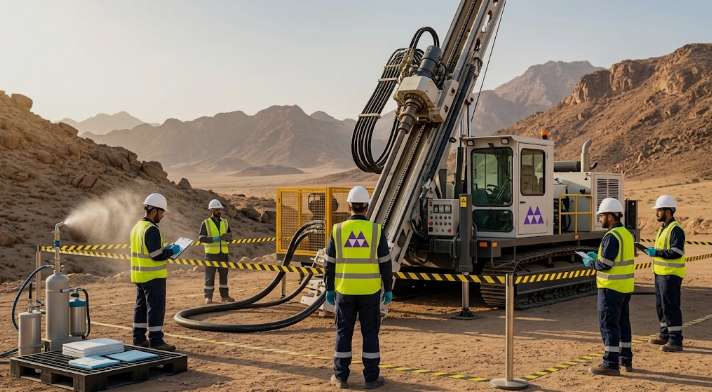
A drilling campaign can turn around in a matter of minutes: a drilling rig is placed on uneven ground, a hydraulic hose leaks or workers approach rotating drilling rods. These are the cases in which drilling activity controls must be used. Drilling HSE consultancy services can be utilized to help mining and mineral exploration teams to identify hazards, coordinate responsibilities and ensure that precautions are effective on site in Saudi Arabia. Planning is particularly important in the case of heat, remote sites and interfaces with contractors.
What Is Drilling HSE Consultancy?
Health, Safety and Environment (HSE). Consultancy turns these roles into tangible measures for the protection of workers, operational risk management, and minimization of the environmental impact. A consultant examines drilling processes, inspects, monitors relevant requirements and creates procedures and documentation. Mining HSE consultancy also provides clarity on the du
ties and roles for the project owner, drilling contractor and subcontractors.
Why Drilling Operations Need Specialized HSE Controls
Drilling involves the use of heavy machinery, rotating parts and compressed systems in a limited workspace. Changing ground conditions and access routes are created when moving a rig between holes. A delay in medical assistance can occur if the terrain is remote. Fuel, lubricants, and drilling fluids must be stored and handled carefully and dust, noise and vibration need exposure controls. There are other interfaces that do not get mentioned when you do your normal site induction process such as mechanical maintenance and electric connections, as well as vehicle deliveries.
Common HSE Risks in Mining and Exploration Drilling
Key hazards include:
- Equipment incidents: rotating rods, moving clamps and maintenance tasks can cause entanglement or crushing.
- Dropped objects and unstable ground: Suspended loads, unsecured tools and weak drilling pads threaten workers and rig stability.
- Exposure: airborne dust, including silica where present, noise and vibration can damage health.
- Fire and energy release: fuels, faulty electrical systems and pressurized hoses require specific precautions.
- Traffic and weather: reversing vehicles, heat, dehydration and environmental exposure affect field teams.
- Drilling site safety requires engineering controls. Dust extraction, for example, should be appropriate and maintained.
Key HSE Controls for Drilling Sites
Begin with a drilling risk assessment of the equipment, location and work sequence. Job Safety Analysis (JSA) is a process that involves dividing each job into its steps, hazards and controls. Safe operating procedures should include issues related to handling rods, rig movements, maintenance and isolation of hazardous energy. It is important to protect from contact with moving equipment with guards and exclusion zones. PPE is used to complement these controls, not replace them. Toolbox talks are used to brief on day-to-day activities and changes. Ensure contractors are competent, trained and supervised prior to assigning tasks. Check rigs, lifting equipment, and hoses and track maintenance issues. If applicable, use permit-to-work systems. Put in place emergency communications, medical evacuation set up, and spill response. Follow up on incidents and near misses, determine the causes of incidents and near misses and conduct inspections/audits to ensure corrective actions are implemented.
Drilling HSE Requirements in Saudi Arabia
According to the guidance provided by the Saudi Ministry of Human Resources and Social Development, the employer has some responsibilities such as taking measures to prevent the hazard, informing the workers about the hazard and its precautions, providing appropriate protective equipment, training workers in the use of protective equipment. Training and instructions must be available in Arabic and other languages, if necessary, that the workers use. Occupational, environmental and licensing requirements should be identified prior to mobilization for projects. Review heat-related prohibitions and recommendations for outdoor work activities. Client standards may have further inspection, reporting and/or permit requirements. Actions, like daily toolbox talks, that are recommended should be separate from requirements under the law. Drilling contractor safety arrangements should include who implements each requirement and who will be responsible for checking the compliance of the requirement.
Practical Drilling HSE Checklist
Before drilling starts, confirm:
- Site risk assessment completed and reviewed with crews.
- Rig, guards, hoses and emergency stops inspected.
- Workers trained and competency checked.
- Suitable PPE is available and correctly used.
- Emergency contacts, communications, and evacuation arrangements tested.
- First-aid and fire equipment accessible.
- Vehicle routes, exclusion zones, and reversing controls established.
- Environmental risks identified; spill controls and waste arrangements ready.
- Daily toolbox talks scheduled and recorded.
- Incident and near-miss reporting understood.
- Repeat checks when rigs relocate, conditions change or new contractors arrive. These checks should guide daily decisions.
When Should a Mining Company Hire Drilling HSE Consultants?
Specialist HSE services are available to assist in the preparation before a new campaign, in multi-contractor sites and in regards to remote access which may make it difficult to respond to an emergency. Support is also helpful for reviewing procedures, preparing for a client audit and addressing persistent defects or near misses. Select consultants who have experience in that field, and know exactly what they are delivering. WECO provides HSE consultancy services which include the provision of risk assessments, safety management plans and environmental compliance services.
Conclusion
Understanding the interaction between equipment, people, and site conditions is the key to drilling safety management. In Saudi Arabia, good controls need to consider both immediate and longer-term health and environmental exposures for mining and exploration projects. Useful procedures in the field are clear responsibilities, capable contractors, and verified corrective actions. While specialist assistance is useful to aid teams to identify gaps and to ensure they meet applicable requirements, it is important that the implementation is done on a day-to-day basis. A practical checklist is discussed that can be used as a starting point for the regular checks during the drilling campaign.