

Last updated: October 27, 2026
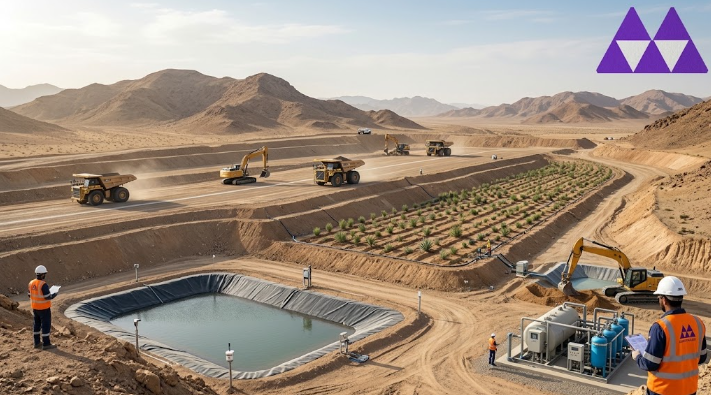
Quick answer: Sustainable mining practices in Saudi Arabia are the measures a mine uses to manage water, energy, dust, waste, land and biodiversity from planning to closure. WECO, a Saudi-based mining and earthworks services provider, supports them through its QHSE consultancy service. The main practices are a water balance, energy monitoring, dust control, tailings management, progressive rehabilitation and permit compliance.
Key takeaways
- The Saudi mining industry needs water efficiency, dust control and rehabilitation planned together.
- Sustainable mining does not mean an impact-free mine. It means identifying impacts and controlling the harm that cannot be avoided.
- Water availability is limited, so a site water balance should be one of the first steps.
- Voluntary efficiency efforts do not replace permit compliance.
- Clear responsibilities, credible monitoring and progressive rehabilitation make field implementation work.
There must be a mutually supportive relationship between water efficiency and dust control, and between water efficiency and rehabilitation planning. Sustainable mining in Saudi Arabia needs to consider water availability, energy consumption, air quality, waste and tailings, land disturbance and biodiversity in the context of the Kingdom’s development of its mineral sector. A developer and/or operator’s job is to integrate practical measures in project design and use which should be monitored and rehabilitated as necessary, with clearly defined responsibility for this.
What Is Sustainable Mining?
Sustainable mining involves managing environmental, operational and social effects during the exploration, development, production, closure and rehabilitation phases. It contains worker protection, responsible resource use and community engagement. Environmental sustainability in the mining industry does not equate to having an ‘impact-free’ mine. It involves identifying impacts, avoiding unnecessary harm and taking reasonable measures to control the harm that does not need to be avoided by making accountable decisions.
Key Sustainable Mining Practices in Saudi Arabia
The table below summarizes the five main areas covered in this guide.
| Area | Main practice | What to track |
| Water | Water balance, leak repair, reuse assessment | Consumption at major points and losses |
| Energy | Record electricity and fuel use by activity | Inefficient equipment, idling, haulage coordination |
| Dust and air quality | Extraction, enclosed handling, targeted suppression | Air quality, road and traffic conditions |
| Waste and tailings | Define waste before storage or reuse, containment, inspections | Contamination, stability, water-related risk |
| Biodiversity and land | Baseline assessment, minimal clearance, progressive rehabilitation | Disturbance within planned limits, soil, erosion, vegetation |
Water Management in Mining
Early planning is especially critical in Saudi projects given the limited availability of water. Develop a water balance showing where water enters, how it is used and where it leaves the operation. Measure consumption of major points, repair leaks and evaluate the possibilities for water quality recycling at processing or dewatering. Treatment needs and process compatibility have to be taken into account when making reuse decisions. Planning for dust suppression should also be done with the objective of not consuming more dust than necessary while maintaining exposure controls.
Energy Efficiency in Mining Operations
Keep a record of electricity and fuel consumption by activity to help pinpoint inefficient equipment and excessive idling and poorly coordinated haulage. Efficient operations can be achieved with the support of maintenance and size fitting of machines. In some situations, electrification might be a good option if there is a power supply and charging infrastructure available, and when duty cycles are aligned. Renewable energy alternatives must be evaluated based on site requirements, reliability, storage requirements, and project economics.
Dust and Air Quality Management
Manage dust at haul roads, crushing and drilling operations. These can be done in accordance with appropriate measures such as extraction and enclosed handling as well as targeted suppression. Control traffic flow and road conditions, operate equipment and track conditions for air quality. Make adjustments to controls based on weather, traffic or production conditions.
Mining Waste and Tailings Management
Properties and risk of waste rock and processing residues and tailings differ. The waste left over from the processing of valuable minerals is called tailings. Define waste prior to storage or reuse. Evaluate the risk of contamination, stability and water-related risk; set up appropriate containment, inspections and monitoring. Waste facilities need to have technically competent planning to ensure they have appropriate drainage, seepage management and emergency plans that are appropriate to the risk. Think rehabilitation and long-term maintenance from the beginning. Reuse should be based on technical and environmental assessment, and should not be taken for granted just because materials are on hand.
Biodiversity and Land Rehabilitation
Baseline assessments are used to gain an understanding of habitats, drainage and sensitive areas prior to development of roads, drilling pads and waste facilities. Keep unnecessary clearance to a minimum, and disturbance within planned limits. If possible, save soil resources for future use in re-vegetation; rehabilitate areas completed gradually. The following factors should be included in post-mining land-use planning: stability, erosion, vegetation and future access. The rehabilitation goals should be realistic in arid places, depending on conditions. On greenfield sites, this baseline work should be done before any road, drilling pad or waste facility is built. Read more about greenfield mining site infrastructure in Saudi Arabia.
Technology Supporting Sustainable Mining
Changes in conditions are monitored and detected for investigation. Water metering can be used for consumption and loss analysis and energy monitoring can be used for inefficient operating patterns. GIS and remote sensing are used to document disturbance, sensitive areas and rehabilitation. Digital mine planning can perform comparison of layout and material movements prior to construction. Automated equipment may help in maintaining operating consistency when applicable but must be proven environmentally beneficial. Reporting that is based on data relies on calibrated instruments, accurate records, and clear accountability for addressing the data. For the equipment side, read our guide to mining equipment and technology solutions in Saudi Arabia.
Environmental Compliance and Responsible Mining in Saudi Arabia
Prior to project implementation, projects should determine which environment-related permits, assessments, conditions and monitoring requirements apply. Requirements vary depending on activity type and project specifics. National Center for Environmental Compliance sets out the environmental assessment for various types of construction permits and for operating permit renewal, it defines the documentation that is dependent on the type of construction. The NCEC monitors the environmental compliance of establishments that have an impact on the environment. For Class A exploration licenses, the environmental pre-assessment is submitted to the NCEC, as explained in our Class A mining licenses guide. Distinguish legal requirements from extra client requirements and recommended practices. Voluntary efficiency efforts are not a substitute for permit compliance. WECO offers environmental compliance as part of its QHSE (Quality, Health, Safety and Environment) consultancy service. Teams looking for sustainable mining practices consulting can read more on our Saudi mining consulting page.
Practical Sustainable Mining Checklist
- Water consumption is monitored.
- Water reuse opportunities assessed.
- Energy consumption monitored.
- Dust controls implemented and checked.
- Waste streams identified and managed.
- Tailings risks assessed by competent specialists.
- Environmental monitoring conducted.
- Land disturbance minimized.
- Rehabilitation integrated into mine planning.
- Environmental incidents documented, investigated and reviewed.
Conclusion
It is crucial that the environmental aspects are taken on board from the outset of project technical planning, through procurement and in the day-to-day decision-making process if the mining operation is to be sustainable. Dust, waste and land management should be considered alongside water and energy in Saudi Arabia as enhancing one area may lead to pressures in the other. Field implementation is supported by the implementation of clear responsibilities, credible monitoring and progressive rehabilitation. Companies should comply with the applicable requirements, consider extra measures based on site conditions and review the results regularly. Solutions that tackle a specific operational risk are most effective in delivering sustainable mining.
Frequently Asked Questions About Sustainable Mining in Saudi Arabia
What are sustainable mining practices in Saudi Arabia?
Sustainable mining practices in Saudi Arabia are measures that manage water, energy, air quality, waste and tailings, land disturbance and biodiversity during exploration, development, production, closure and rehabilitation. They include a site water balance, energy monitoring, dust controls, waste and tailings management, progressive rehabilitation and compliance with applicable permits.
Does sustainable mining mean a mine has no impact?
No. Sustainable mining does not mean an impact-free mine. It means identifying impacts, avoiding unnecessary harm, and taking reasonable measures to control the harm that cannot be avoided.
Why is water management important in Saudi mining projects?
Water availability is limited in Saudi Arabia, so early planning is critical. A water balance shows where water enters, how it is used and where it leaves the operation. Measuring consumption, repairing leaks and assessing reuse help reduce demand, but reuse decisions must consider treatment needs and process compatibility.
What are tailings in mining?
Tailings are the waste left over from the processing of valuable minerals. They need defined properties, appropriate containment, inspections, monitoring and emergency plans that match the risk.
Which environmental requirements apply to mining projects in Saudi Arabia?
Requirements vary depending on activity type and project specifics. The National Center for Environmental Compliance sets out the environmental assessment for various types of construction permits and for operating permit renewal. Projects should separate legal requirements from client requirements and recommended practices, and voluntary efficiency efforts do not replace permit compliance.
How can mines rehabilitate land in an arid climate?
Start with baseline assessments, keep clearance and disturbance within planned limits, save soil for re-vegetation and rehabilitate completed areas gradually. Goals should be realistic for arid conditions and should consider stability, erosion, vegetation and future access.
Can WECO help with environmental compliance for mining projects?
Need help with environmental compliance on a mining project? Talk to WECO’s QHSE team.
Yes. WECO offers environmental compliance as part of its QHSE consultancy service. You can contact the team to discuss your project.